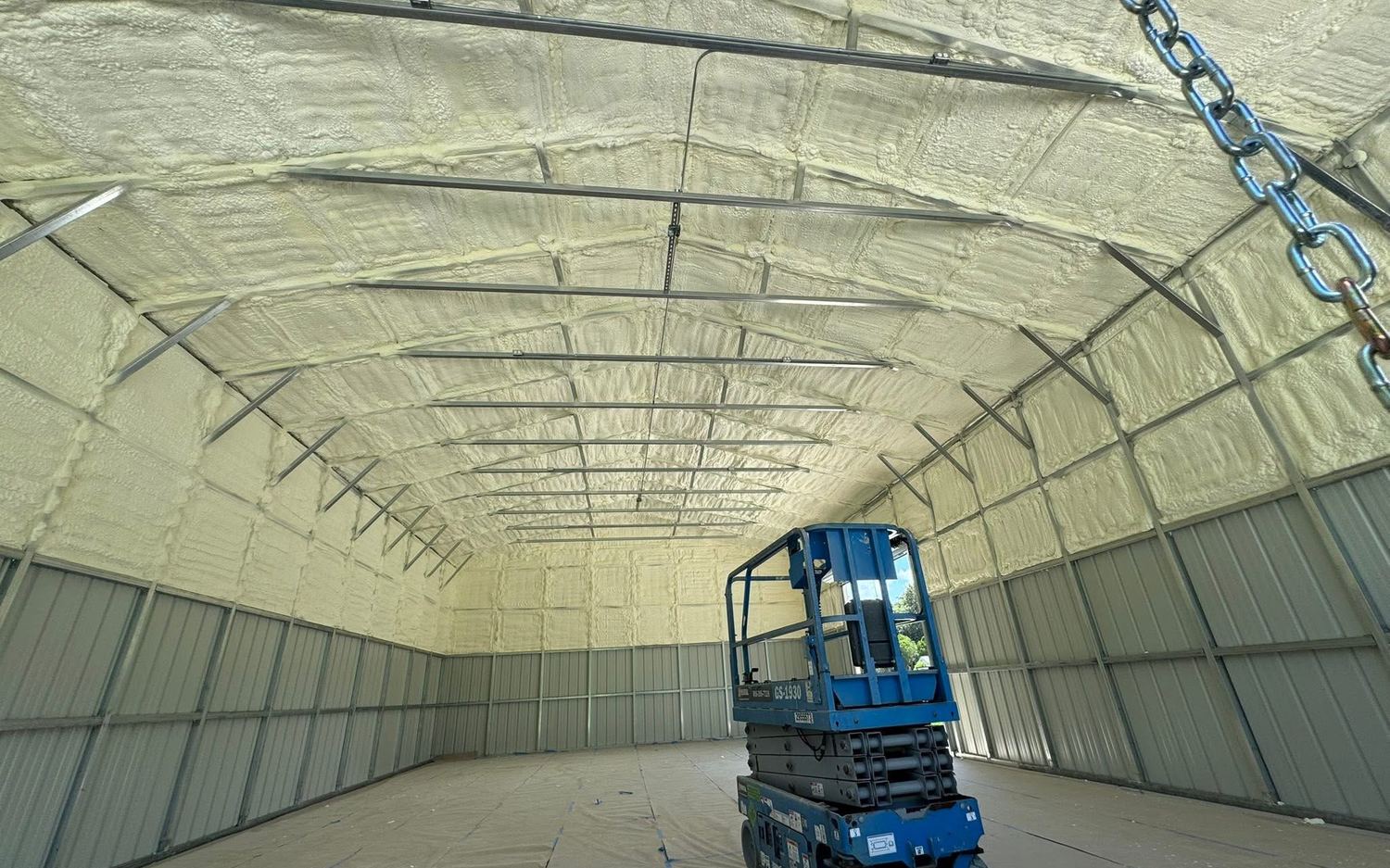
Spray foam insulation
In a Florida summer the problem is not just heat coming through the ceiling. It is hot, humid air moving through the envelope, and ductwork sitting in an attic hot enough to cook in. Foam addresses both.
The measured case
Every one of these comes from the Department of Energy, the Florida Solar Energy Center, NREL or peer-reviewed research. Sources are listed at the bottom of this page.
Why it is different
R-value measures resistance to heat conducting through a material. It says nothing about air moving through it or around it. That distinction is the whole argument in a hot, humid climate, because the air carries moisture with it and your air conditioner has to pull that moisture back out.
Both foam types test as air-impermeable under ASTM E 283, the standard air-leakage test. Open-cell measures 0.0049 L/s·m²; closed-cell measures 0.000025. Fiberglass is air-permeable by design, so humid air passes straight through it.
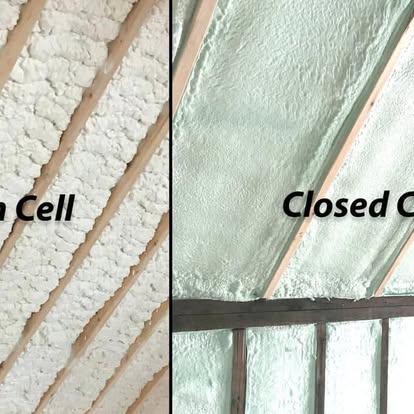
Closed-cell at two inches comes in under 1 perm, which makes it a vapor retarder. Open-cell is around 10 perms at five inches and is not — it stays vapor-open so the assembly can dry inward. Which one is right depends on the assembly, not on which is more expensive.
Aged values from the Department of Energy's Building America spray foam guide. Aged is the number that matters: closed-cell foam's R-value drifts down from its initial figure as the blowing agent diffuses out, so anyone quoting R-7 or higher per inch is quoting a number that will not last.
A note on comparisons: the DOE does not publish a per-inch R-value for fiberglass, because blown fiberglass does not scale proportionally with depth. What it does publish is cavity totals — R-13 to R-15 for a standard 2x4 wall. We would rather give you that than a per-inch fiberglass number we cannot source.
The Florida case
Foaming the underside of the roof deck brings the attic inside the conditioned envelope. In most Florida homes that is where the real money is, and it has very little to do with R-value.
Ductwork in an attic loses 25 to 40% of the energy passing through it. NREL's Orlando benchmark puts attic duct efficiency at 65%, against 100% thermal regain for ducts inside conditioned space. Seal the attic and the ducts are no longer sitting in an oven. This is the single biggest effect, and it is the reason the gain is smaller if your ducts are already tight and well sealed.
At the Florida Solar Energy Center's test facility, a sealed attic averaged 79.9°F and peaked at 88°F across a summer. The vented attic beside it averaged 90.9°F and peaked at 121.1°F. In Ft. Myers monitoring, the control attic ran about 40°F above outside air while the sealed attic stayed near it.
Air that leaks in through permeable insulation brings humidity with it, and removing that moisture is work your air conditioner has to do. In hot-humid field monitoring, condensation showed up on the underside of roof sheathing with cellulose and fiberglass — but not with low-density foam.
University of Florida researchers, partly funded by the Florida Building Commission, tested 186 roof sheathing panels and found closed-cell foam under pre-1994 code-minimum decking raised uplift capacity by 250 to 300%. Thicker application performed best. This is laboratory research, not an insurance credit — see the straight talk below.
Straight talk
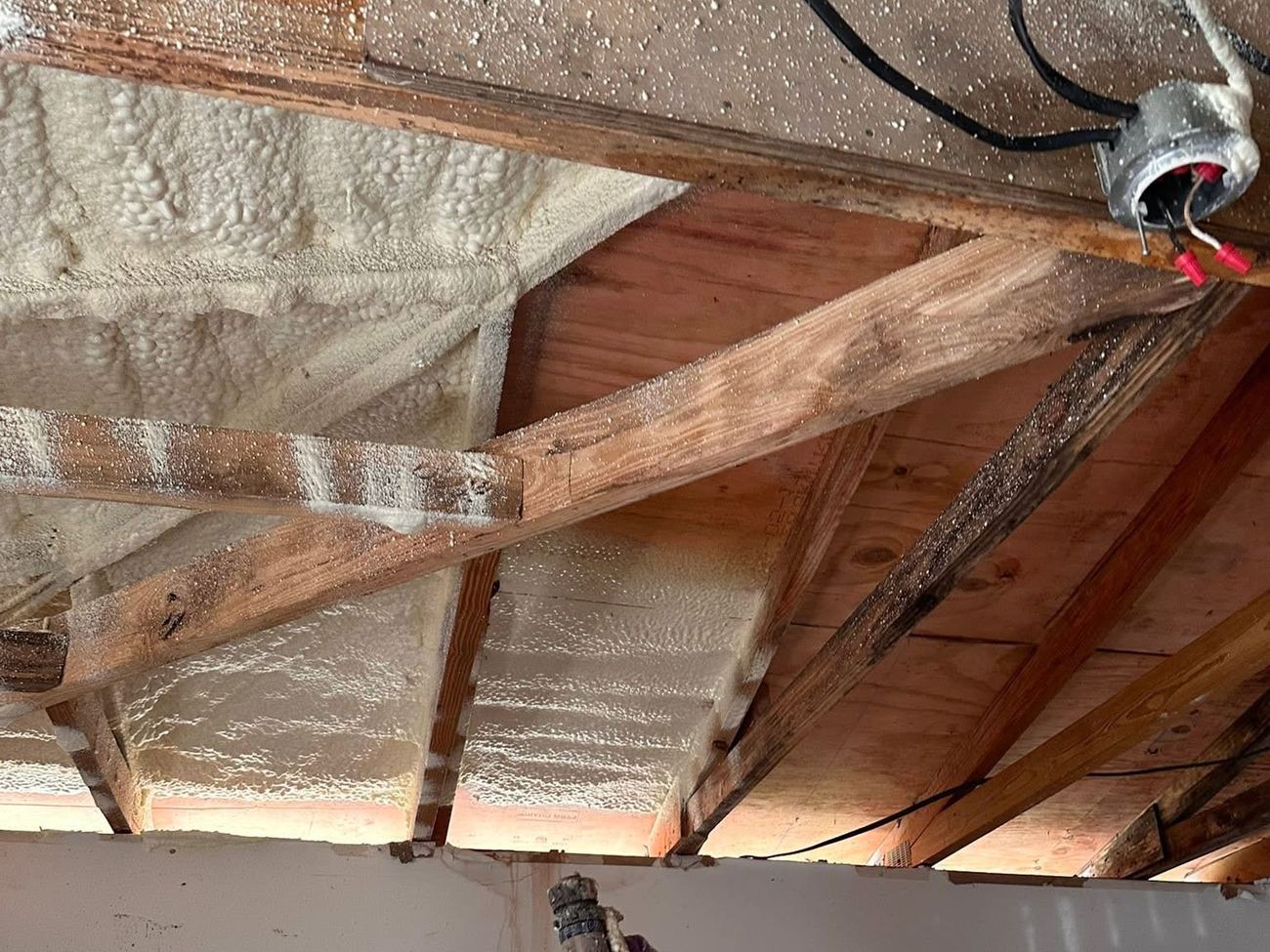
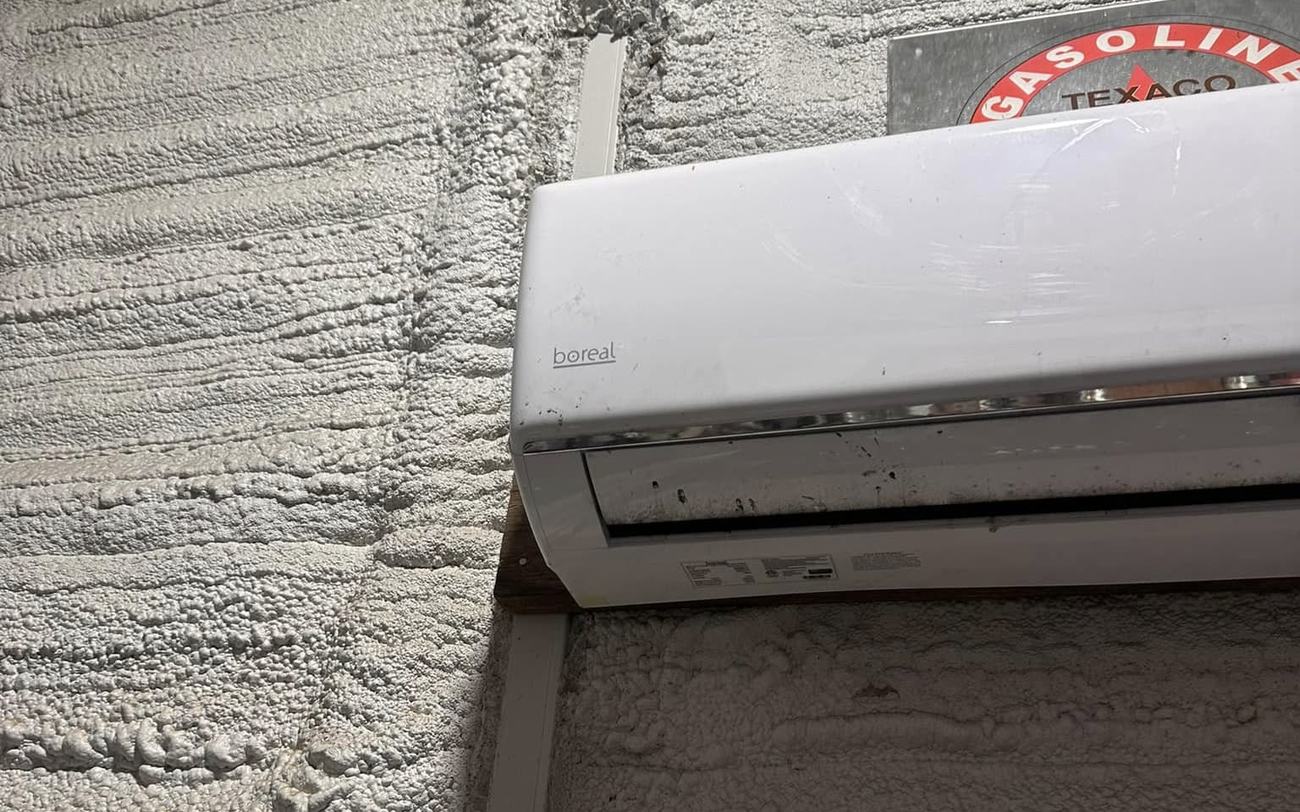
We would rather you hear this from us than find it out afterwards. Foam is the right call on a lot of Florida houses. It is not the right call on all of them.
On the job
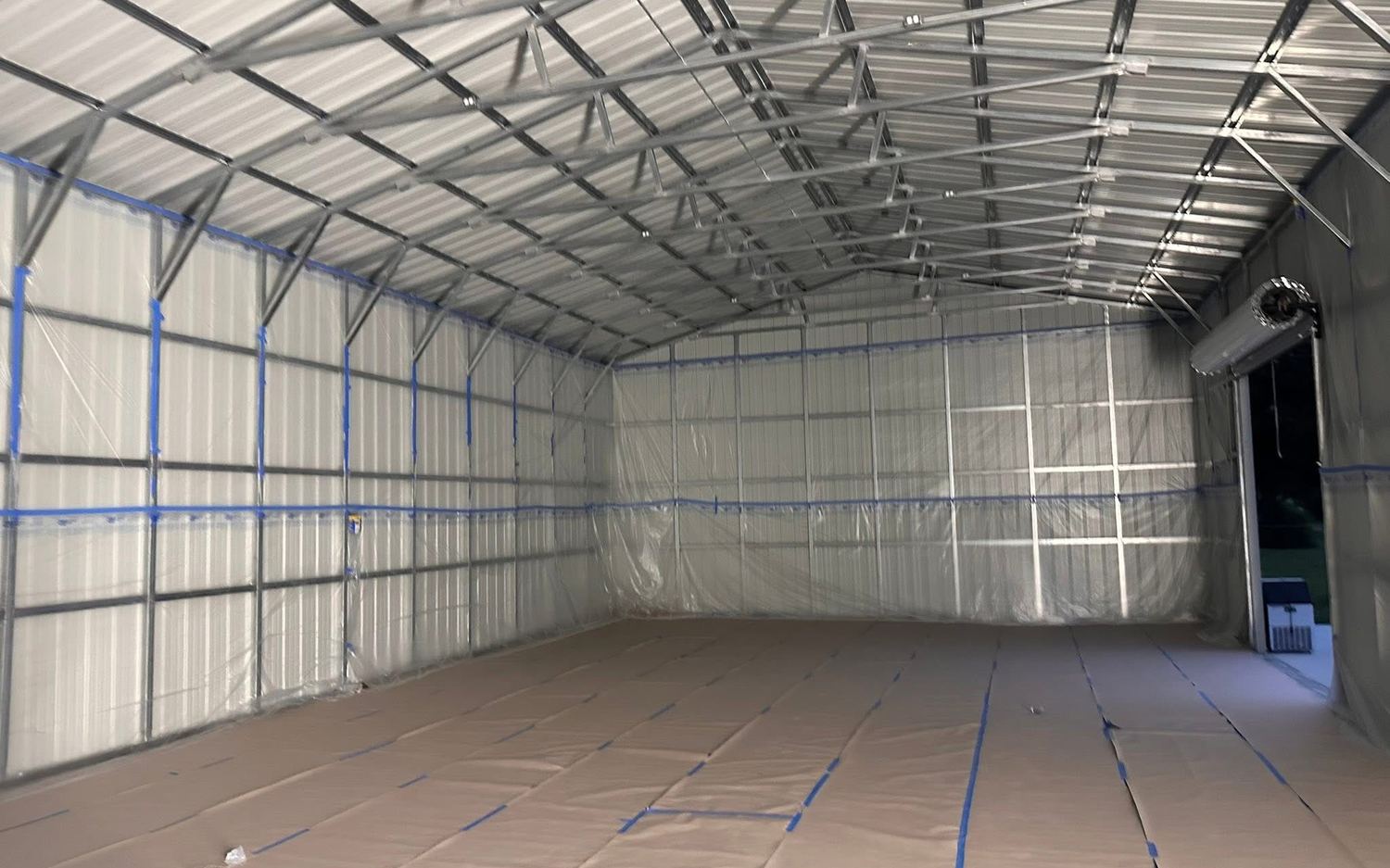
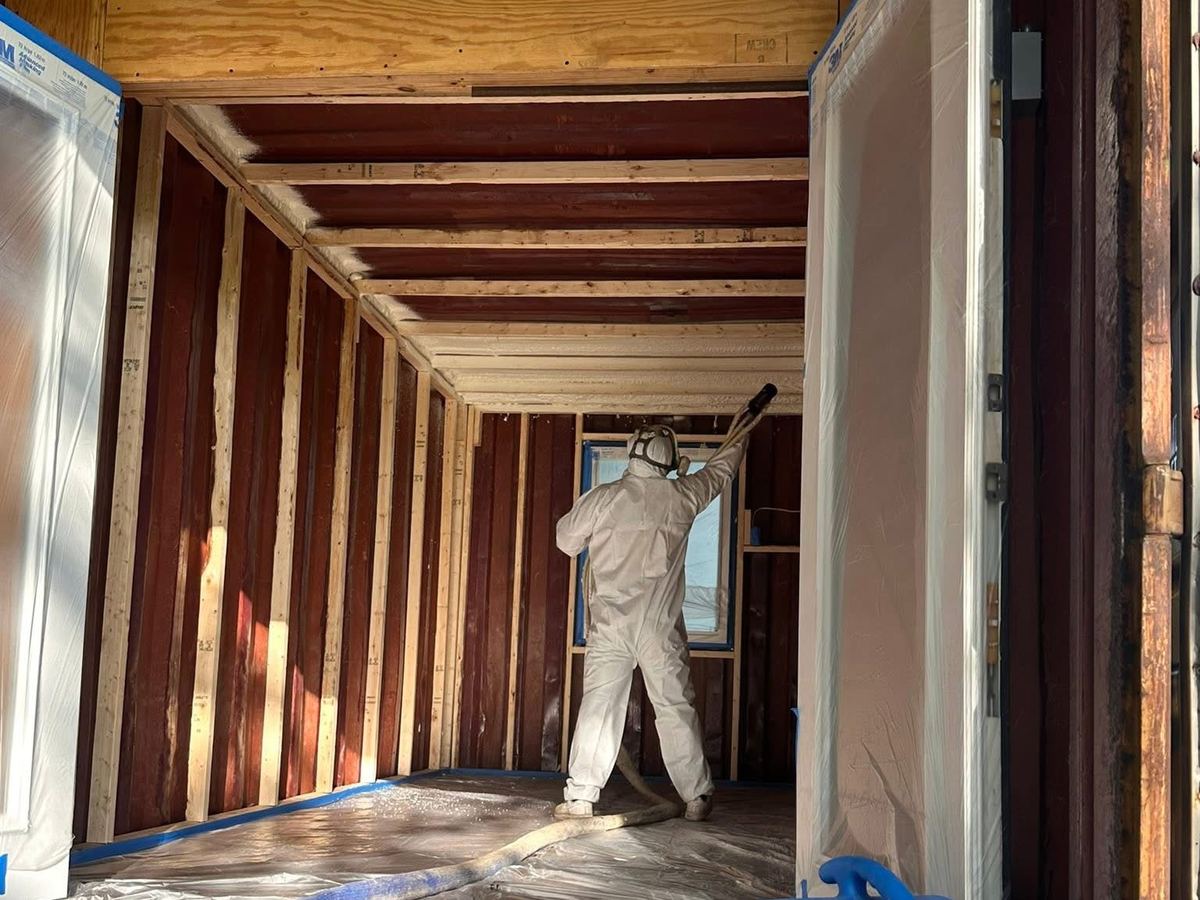
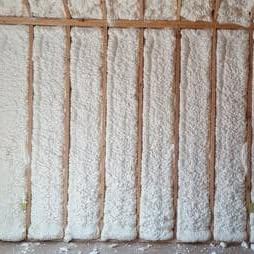
Foam is mixed on site and it goes everywhere it is pointed. Most of the labour on a foam job is the part before any foam comes out of the gun — masking, sheeting and containing, so the only thing that gets coated is what is meant to be coated.
What we install
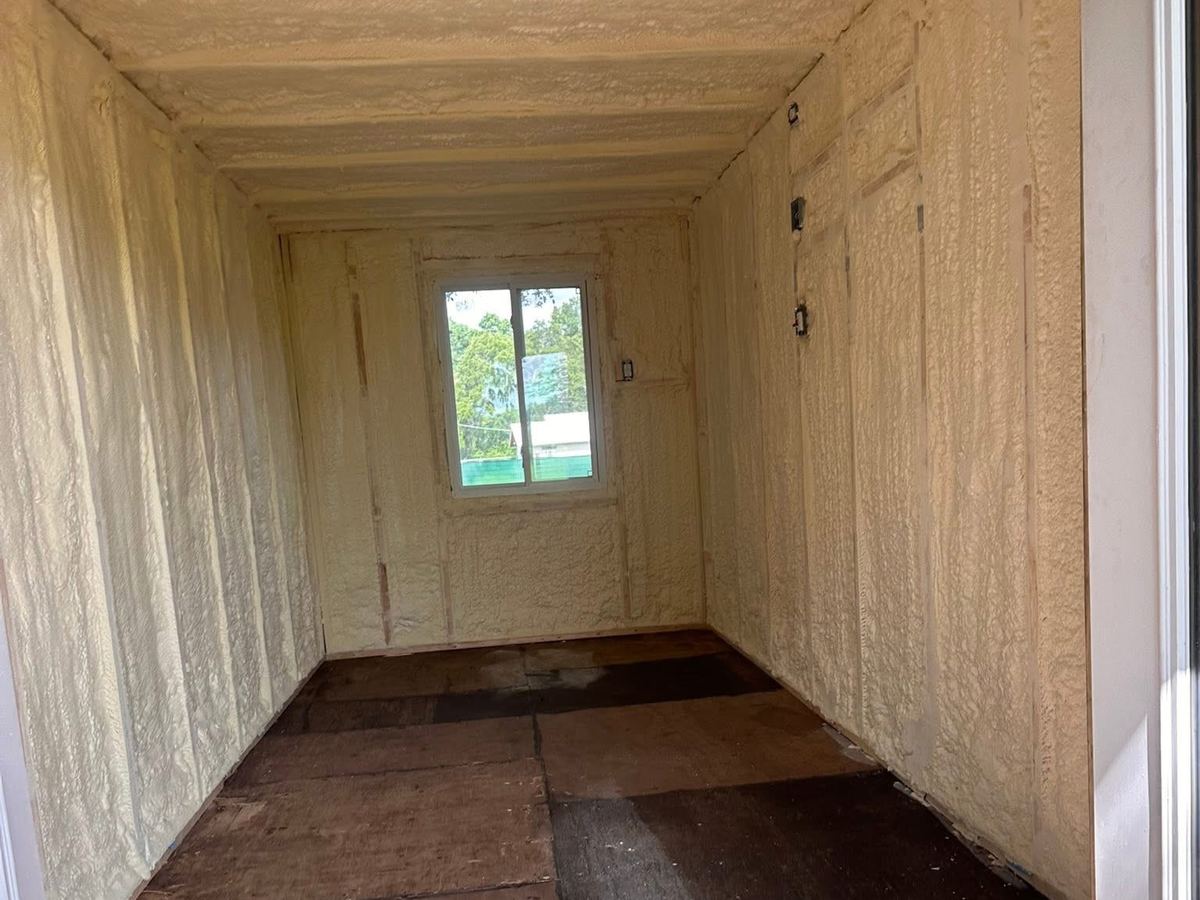
Open-cell at the underside of the roof deck, soffit vents blocked, attic brought inside the conditioned envelope.
Adds a vapor retarder and rigidity in one application. The right call where bay depth is shallow or exposure is coastal.
Seals the framing cavity and the floor system against humidity and the pests that follow it.
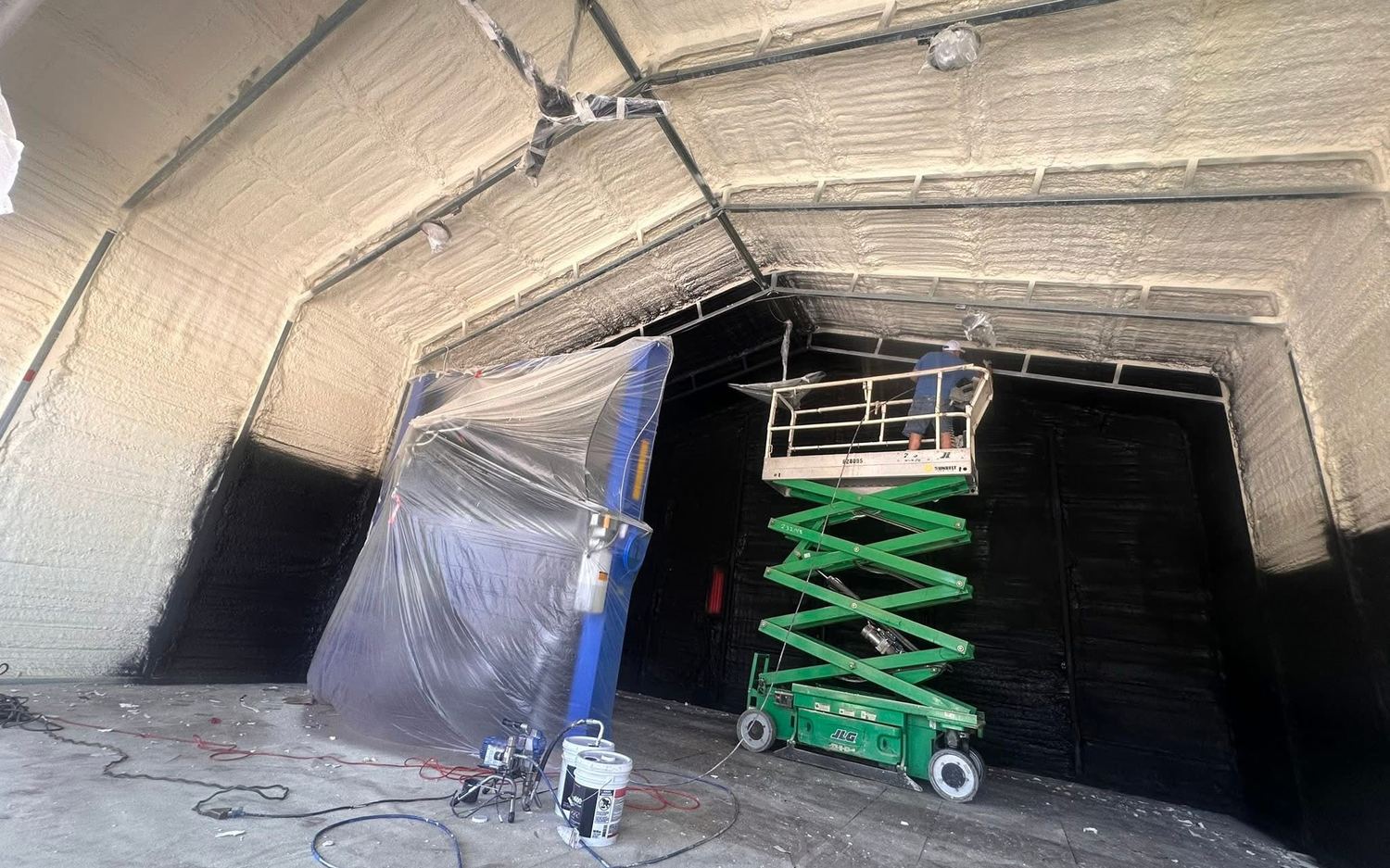
Stops condensation dripping off the underside of steel panels, which batt insulation never solves.
Old sagging or wet batts bagged and hauled, deck cleaned, foam applied the same visit where access allows.
Scheduled around the builder's rough-in so inspections are not held up waiting on insulation.
Common questions
Open-cell is the usual pick at the roof deck. It costs less per board foot and stays vapor-open, so the assembly can dry inward. Closed-cell makes sense where rafter bays are shallow, where you want the added rigidity, or on coastal exposure. The Department of Energy lists open-cell as acceptable in hot-humid climates with one condition: do not add a vapor retarder on the interior side, because it needs to be able to dry inward.
For Climate Zone 2, ENERGY STAR recommends R-49 for an uninsulated attic, or R-38 if there are already three to four inches up there. On a sealed deck assembly, the Florida Solar Energy Center's floor is R-19 equivalent.
Not the manufacturing-defect warranty. GAF's technical bulletin states under-deck spray foam is an accepted method and that their shingle warranty remains in effect — but shingle damage caused by the foam itself or by inadequate ventilation is excluded. Policies differ by manufacturer, so we check the specific shingle brand on each job.
Under the Florida Building Code, no. Unvented attics in new Florida homes fall under FBC Residential R806.5, which does not require dedicated supply and return ducts in the attic. Some conditioning is still considered best practice for controlling surface condensation, and we will talk it through on your particular house.
Both foam types are combustible and the code treats them that way. Habitable space generally requires a 15-minute thermal barrier, equivalent to half-inch gypsum board. Attics and crawlspaces entered only for utility service may only need an ignition barrier. We build the barrier requirement into the quote rather than leaving it as a surprise at inspection.
More — typically a multiple of the material cost, and it varies a lot by assembly, depth and access. We will not quote you a national average. We will measure your attic and give you a written number.
Free estimate
We will look at your attic, your ductwork and your roof's remaining life, then tell you straight whether it is worth doing.